One airplane, three lives.
An owner buys a Vision Jet and leases it back onto your certificate. Your training side teaches in it. Your charter side sells it. And on the weekend the owner flies it, because it's his airplane. Three lives, three rulebooks, one airframe, and you hold operational control for two of those lives.
Every tool we've seen picks one of those lives and treats the other two as exceptions. Liito's premise is that none of them is the exception: the airplane carries one set of records, whoever owns it and wherever it sits, and every flight is checked against the rulebook that governs that flight, projected forward to the day it actually departs.
What follows is a real operating day in Liito. Every screen below is the actual product running on a full simulated operation: ten aircraft, twenty-nine events, charter, training, owner flying, and maintenance in flight at once.
The operating day, computed
The dial is the whole operation at a glance: what needs a decision, what's ready to fly, what's due, what's on watch. The queue on the left is the walkaround you can't do in person. Every airplane, every flight, every crew member has already been checked, and what surfaced is a short list of decisions, each carrying its reason and its next action.
Nobody assembled this list, and none of these numbers was typed. Note the stamp on the dial: computed minutes ago, off the same records everything else runs on.
One board, every mission
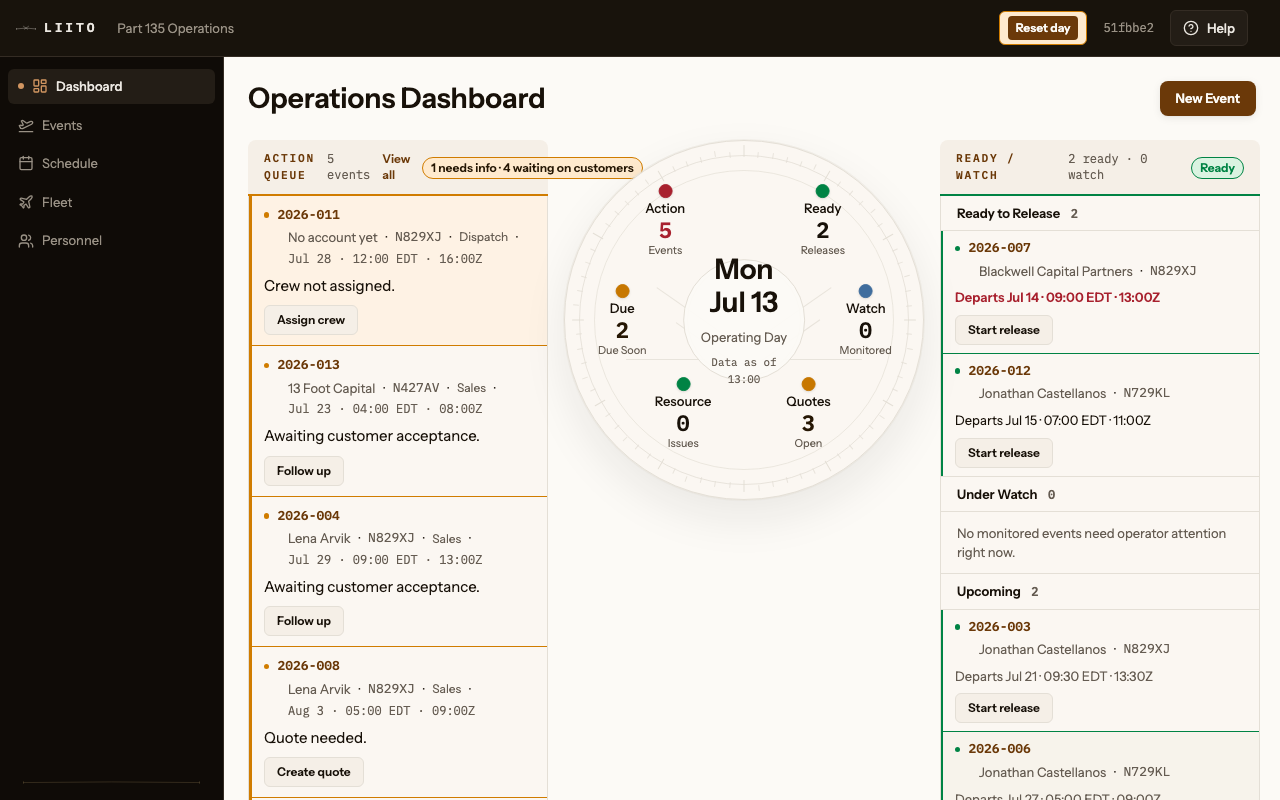
Everything on the books, as rows that answer three questions: which flight, what's wrong, what's next. Look at the purpose on each row. A Part 135 customer charter. Then an owner flight under Part 91: same airplane pool, different rulebook, one board. Training events and rentals run against these same tails in their own views, so a training block and a revenue flight can't silently double-book an airplane.
The owner flew it. You charter it Monday.
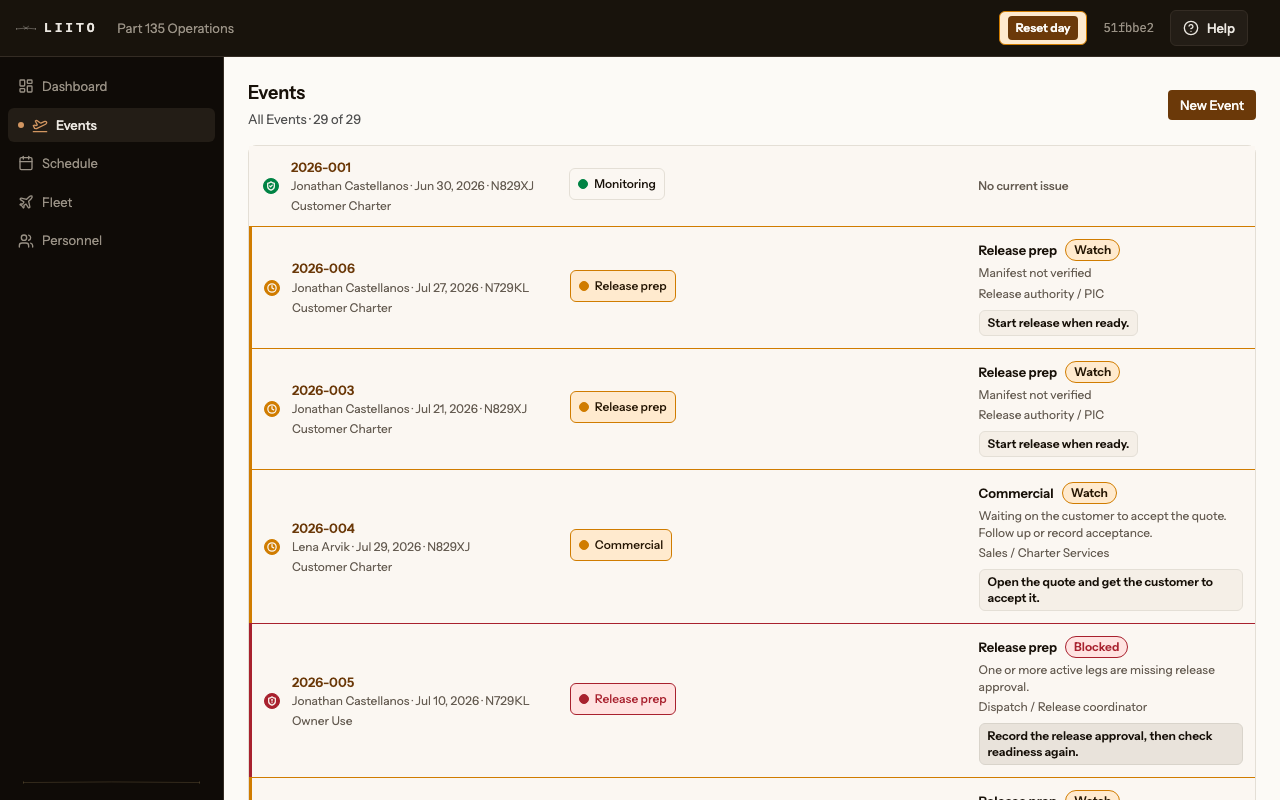
This Vision Jet belongs to an owner's family office. It sits on the operator's certificate: managed, maintained, and sold for charter, and the owner's pilot flies it Part 91 whenever the family wants it. A few days ago it flew exactly that kind of owner trip. Now it's booked on a revenue charter, and the release checks tell the story.
Thirteen checks passed, each cited to the rule it enforces. And one is blocked: the airplane came back from Part 91 owner use, and until someone stands behind the statement that it's a Part 135 airplane again, the release is held. Not a sticky note, not a policy memo. Held, with the requirement named, the owning role named, and what clears it spelled out.
The airplane you'll have, not the one you have now
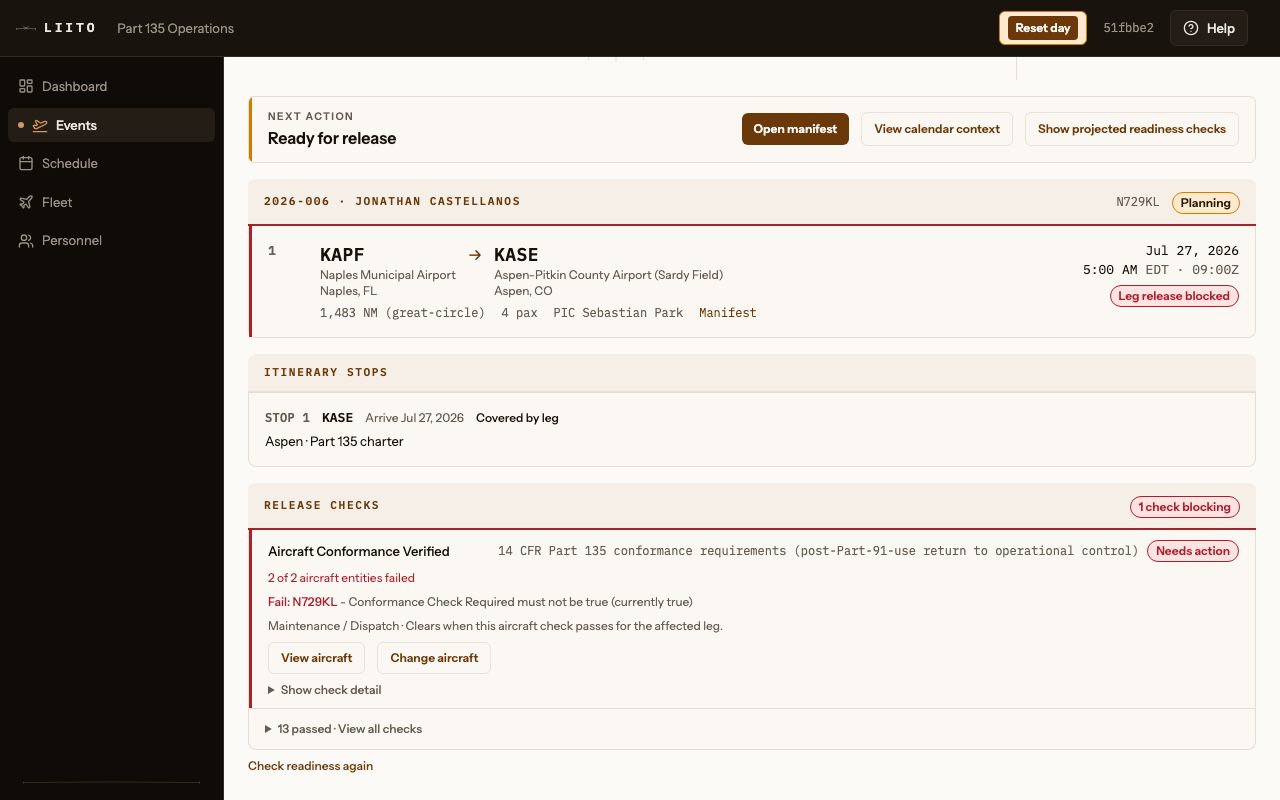
A charter to Austin, ten days out. If you inspected this airplane today it would be perfectly legal: it carries a small deferred item that's good for three more days. But the flight is in ten. Legal now. Not legal on the day it flies.
Most systems ask whether the airplane is airworthy now. Liito projects the airplane and the crew forward through everything on the schedule to the moment of departure and checks that future state, against the rule, cited on screen. You find out with ten days to act instead of on a ramp with a client standing on the tarmac. This forward-projected compliance engine is patent-pending.
The fleet you can't see out the window
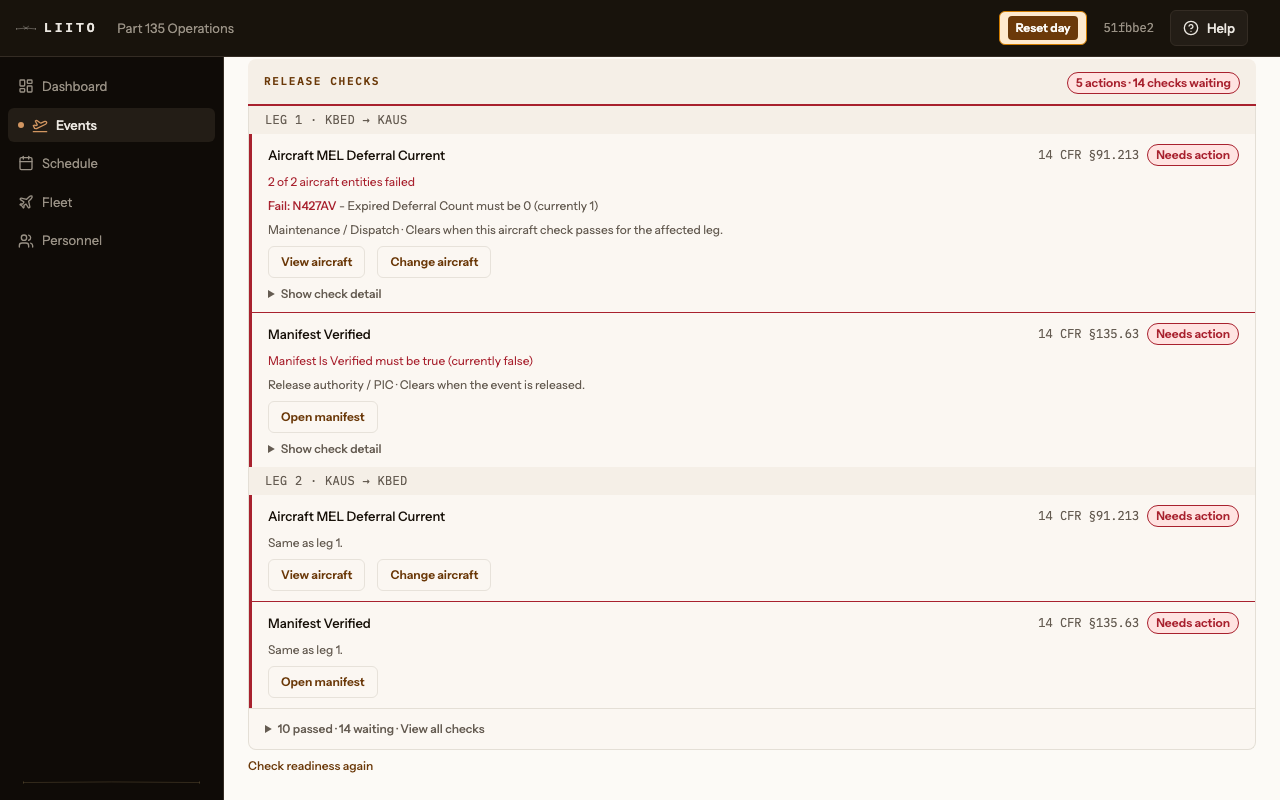
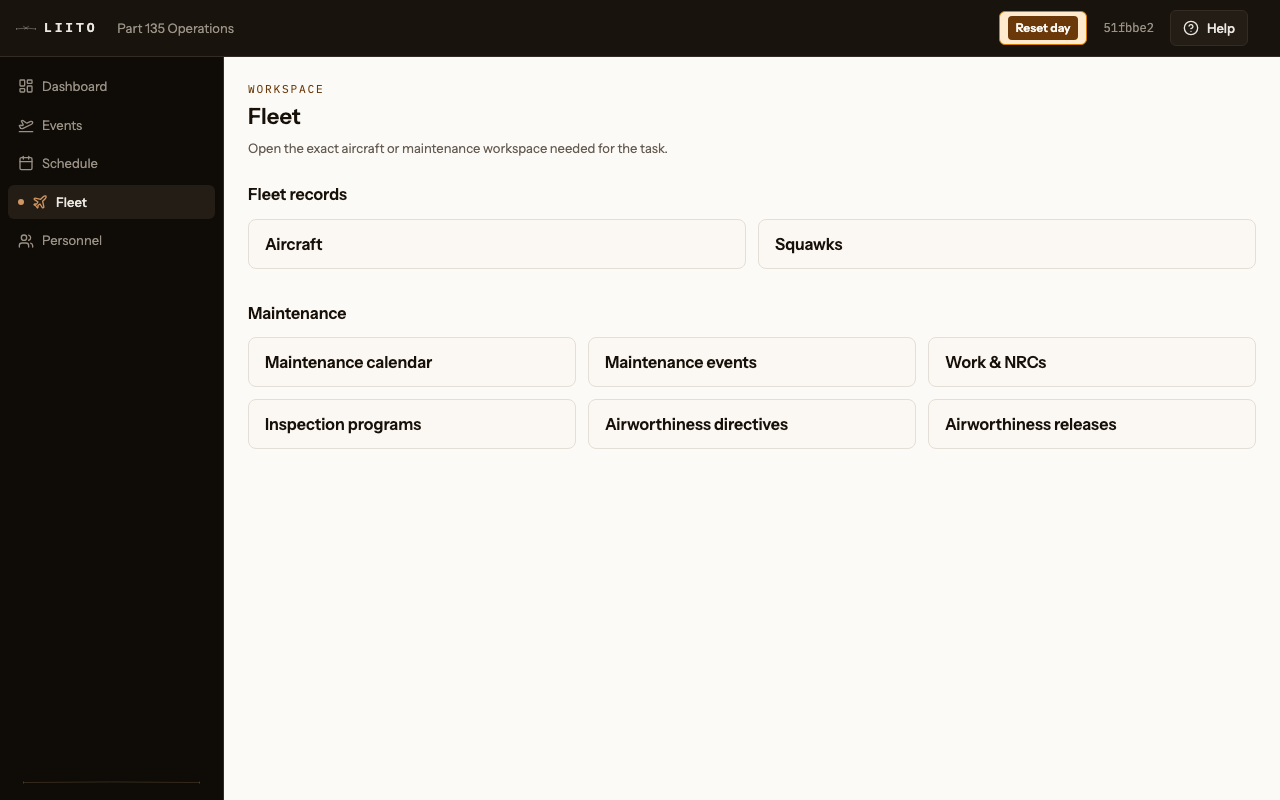
The Fleet workspace is the front door to the physical side of the operation: aircraft and squawks, the maintenance calendar, work items, inspection programs, airworthiness directives, and releases, one task-oriented hub.
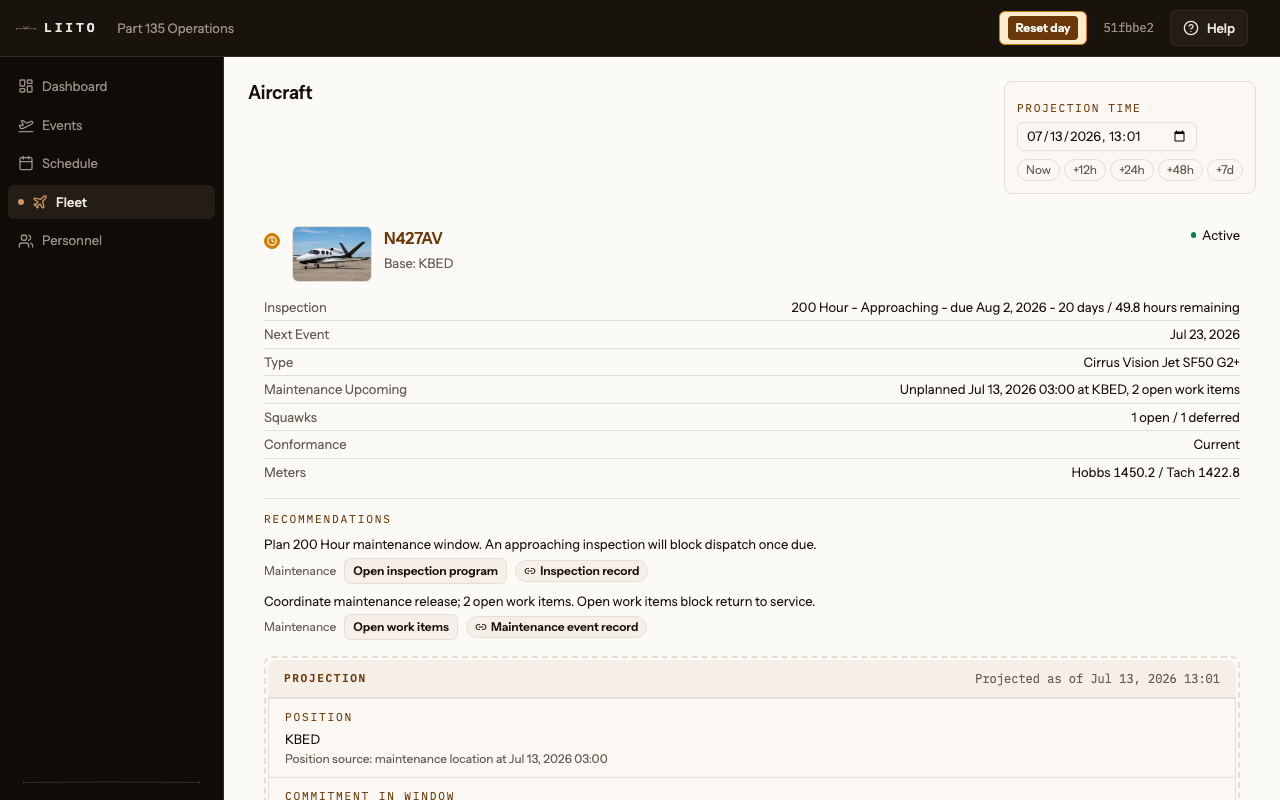
Inside it, a second forward-looking view answers a different question: not "will it be legal" but "where will it be, and what's around it." Pick a moment and every card re-answers for that time. Inspections count down in days and in projected flight hours, because Liito knows how many hours the booked schedule will fly. Both meters are on the card. So is each airplane's conformance state.
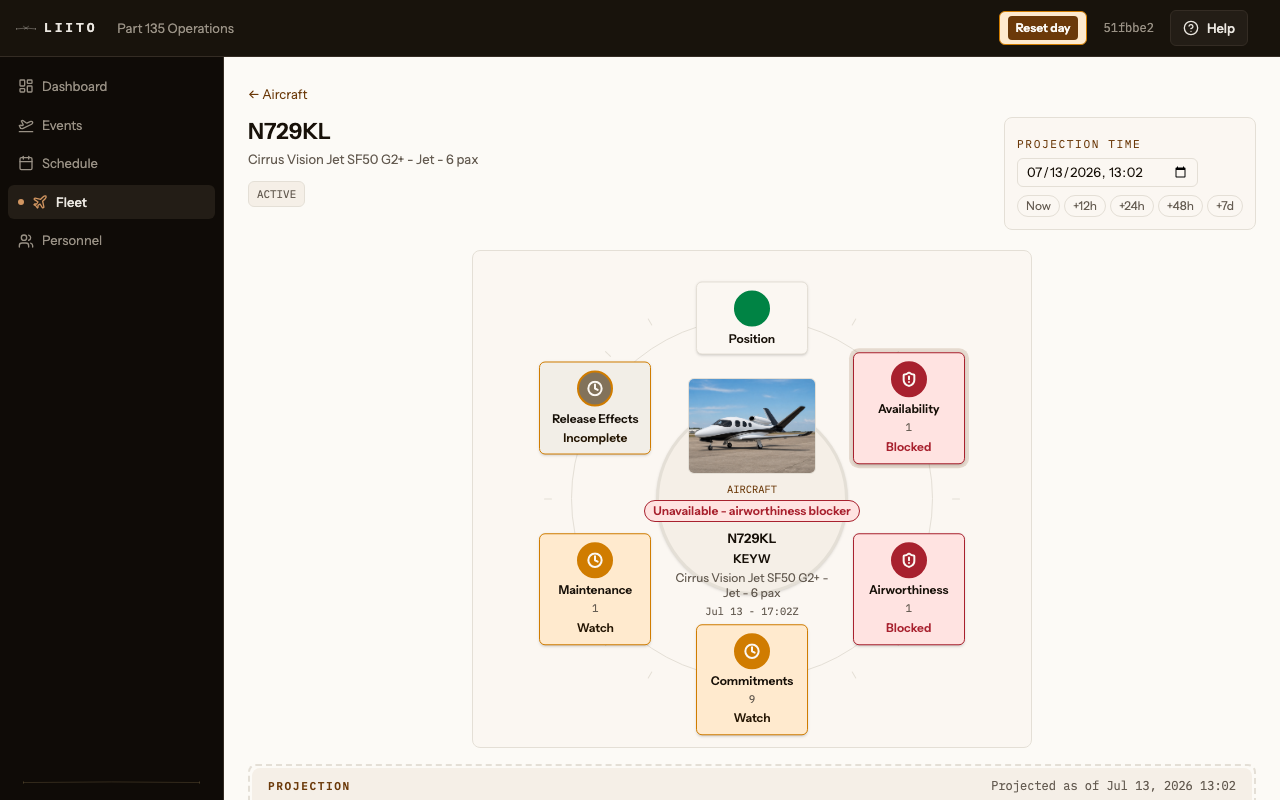
Click into the managed Vision Jet and the airplane's whole situation is one face: where it's projected to be, with the evidence behind that answer, what's committed against it, and why it's currently unavailable.
Training is an operation. Qualifications are records.
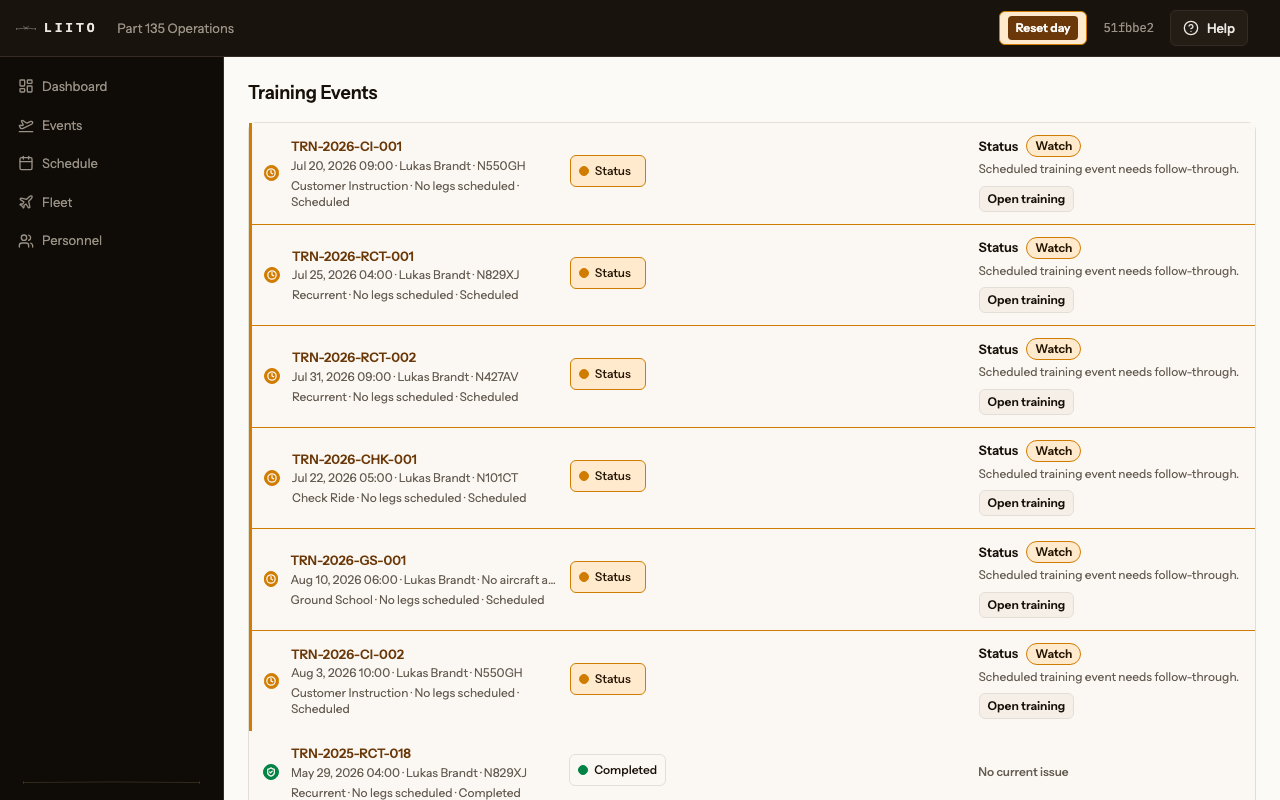
Training isn't a calendar bolted on the side. Customer instruction, recurrent events, check rides, and ground school are first-class records against the same fleet the charter side sells.
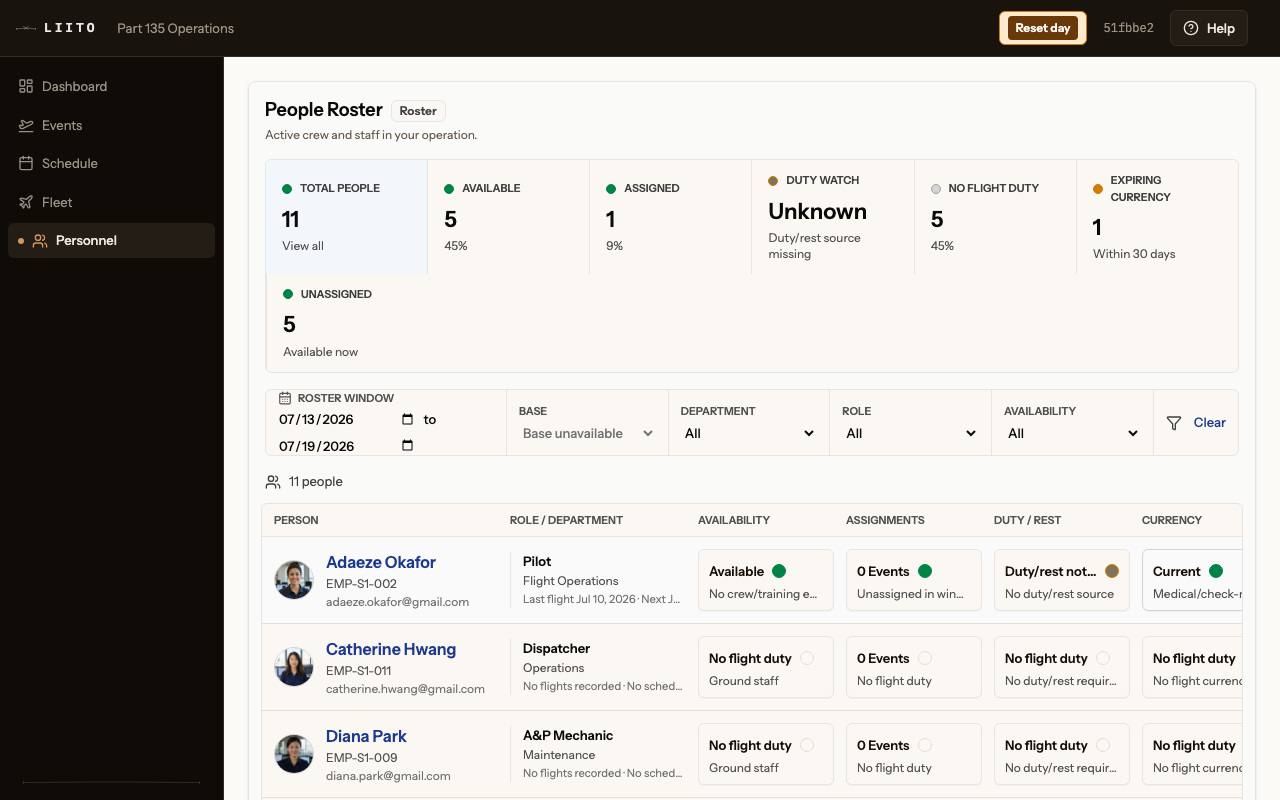
And the roster is indexed by what people are qualified to do: pilots, training authorities, check airmen, ground instructors, and the maintenance side too, A&P mechanics and IA inspectors in the same list. Sign-offs are authority-checked: a training record needs a signer who holds the authority for that kind of training, and a maintenance work item can only be signed off by someone whose mechanic credential is on file, under their own PIN. Qualified is enforced, not assumed.
The money follows the records
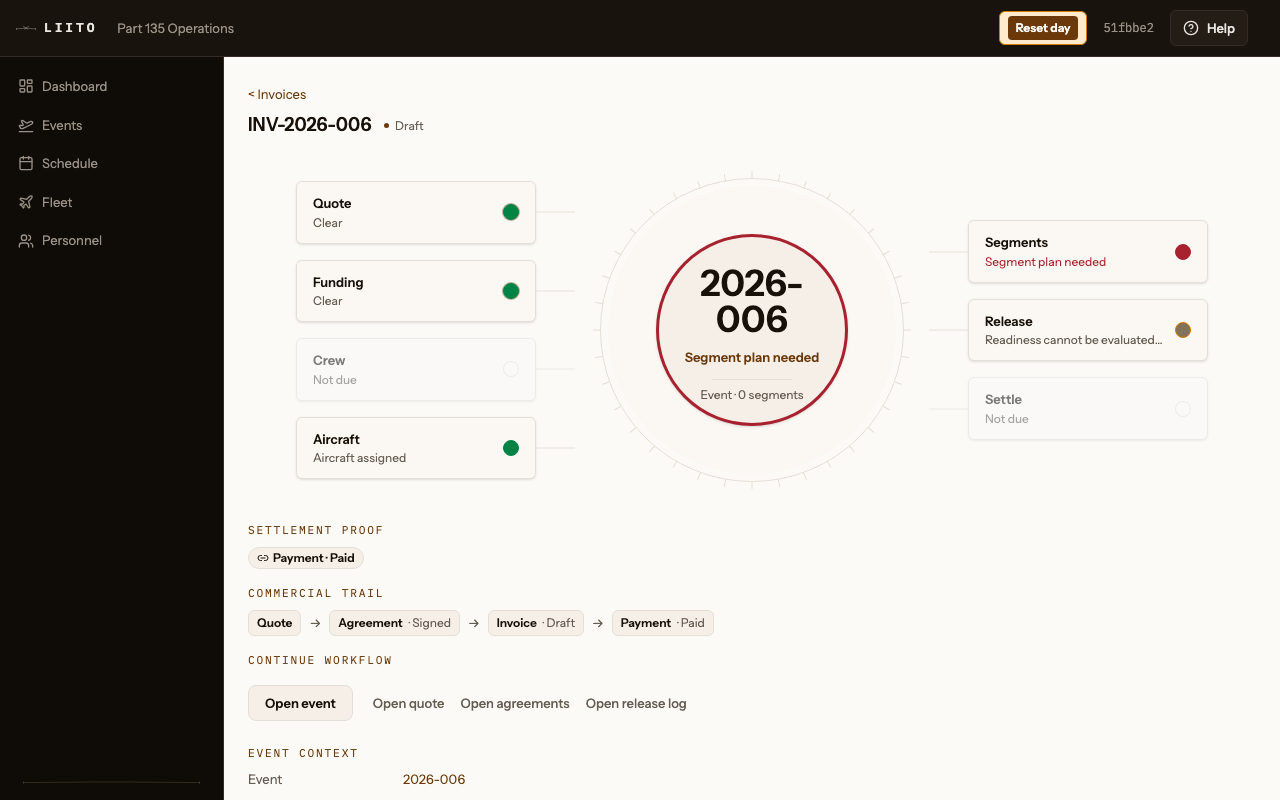
On the charter side it's one chain, and the screen draws it: the quote became the agreement, the agreement became the event, the event became the invoice, and the payment settles it. Every pill links back to the record behind it, so you bill what you actually flew. And when the owner flies his own airplane there's no charter contract to paper, but the flying is still billed off the same trip records.
That's the whole idea.
Airplanes that live three lives, on one set of records: a release gate that knows which rulebook each flight flies under, cites the rule on screen, and won't release a charter after owner use until a qualified person signs that it's conformant again, and a projection engine that tells you today which flight won't be legal on the day it flies.
That's operational control you can actually demonstrate, for a fleet you can't see out the window.
To see it live on your operation's shape, write aaron.elder@me.com or visit liitolabs.com.
Access control
People listed here can view this walkthrough (email login, no account needed). Changes take effect immediately.